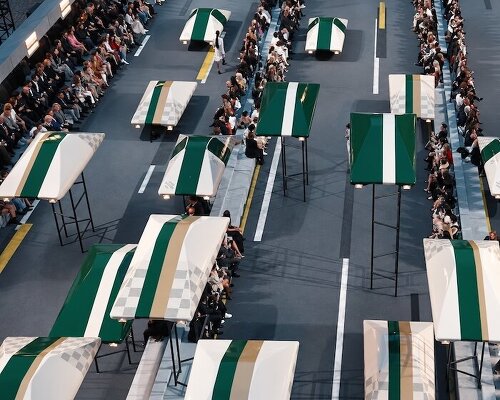
Thirty-four futuristic vehicle sculptures filled the Cour Carrée du Louvre for Louis Vuitton's spring-summer 2027 show, creating a temporary cityscape within one of Paris's most recognisable historic courtyards. The installation was designed by James Chinlund for creative director Nicolas Ghesquière's runway presentation.
The concept vehicles appeared to hover across the courtyard, shifting the visual language of the space from monumental museum architecture to speculative transport infrastructure. Rather than treating the Louvre as a static backdrop, the set used its formal geometry and enclosed scale to frame an imagined urban environment.
According to Designboom's report on the installation, the vehicles transformed the courtyard into a surreal streetscape for the collection. The approach placed industrial-looking sculptural forms in deliberate contrast with the Louvre's historic stone façades.
For architects and urban designers, the project offers a concise example of how temporary scenography can alter the reading of a civic setting without changing its permanent fabric. Its impact came from repetition, scale and the unusual occupation of open space — using objects associated with mobility to suggest a city suspended between infrastructure, fashion and fiction.